Leave Your Message
0%

These days, Glyphosate Herbicide has really become a key player in modern agriculture. It’s helped farmers manage their crops more effectively and practice more sustainable farming. I remember hearing Dr. David M. Shoup, a well-known expert in agronomy, say that glyphosate totally changed how we deal with weeds. He mentioned how it’s enabled farmers to boost their yields and produce food more efficiently—that’s pretty true, right? This eco-friendlier option has allowed farmers to fight off invasive weeds that steal nutrients away from their crops, leading to better productivity and using less land overall.
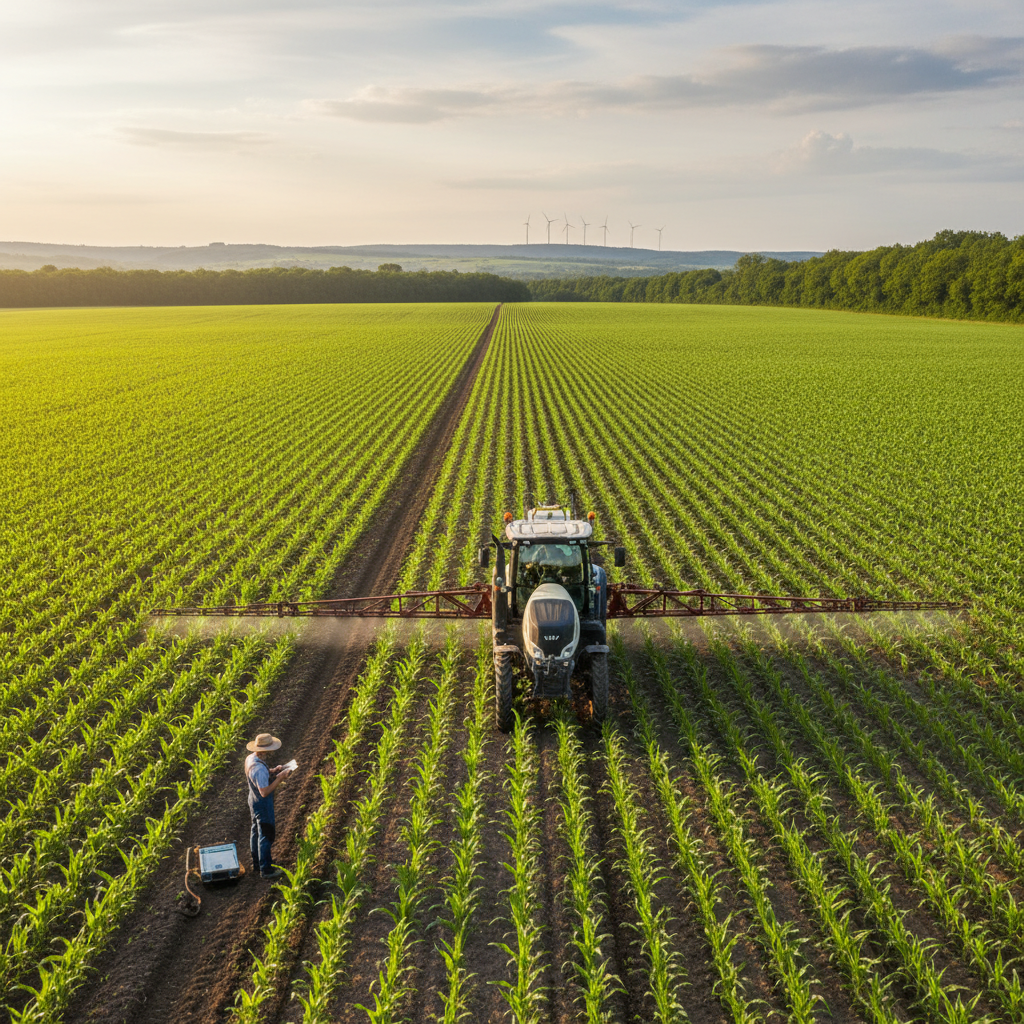
Why Glyphosate Herbicide is Essential for Modern Agriculture Practices

At Innovation Meiland (Hefei) Co., LTD., we truly understand how important glyphosate herbicide is in today’s farming world. We’re all about researching and developing new, innovative pesticide products and formulas to meet the rising challenge of herbicide-resistant weeds. By embracing new tech and fresh processes, we want to make sure glyphosate stays a vital tool for farmers, especially as they work to feed a growing global population while taking care of the environment. As we dig deeper into what makes glyphosate so important, we’ll talk about its benefits, how it’s used, and the exciting advancements that keep shaping its future in crop farming.

Role of Glyphosate in Enhancing Crop Yields: Analyzing Statistical Growth Data

Glyphosate herbicide plays a crucial role in modern agriculture, particularly in enhancing crop yields. Numerous statistical analyses have demonstrated that the use of glyphosate significantly increases the productivity of various crops. For instance, studies have shown that farmers employing glyphosate-resistant varieties can achieve yield increases of up to 20% compared to those who use conventional methods. The herbicide allows for more efficient weed control, which means crops receive better access to nutrients and water, ultimately driving higher productivity.

Moreover, the adoption of glyphosate has streamlined farming practices, allowing for reduced tillage and less soil disturbance. This shift not only conserves soil health but also supports higher yields over time. Data from agricultural reports indicate that regions utilizing glyphosate extensively experience improved growth rates across staple crops such as corn and soybeans. By analyzing growth statistics, it becomes evident that glyphosate's role in modern agriculture is instrumental in meeting the increasing global food demand while promoting sustainable farming practices.

Impact of Glyphosate on Weed Management and Cost Reduction in Farming

Glyphosate herbicide has transformed the landscape of modern agriculture, becoming a cornerstone for effective weed management. By targeting specific weed species while minimizing harm to crops, glyphosate allows farmers to maintain healthy fields and maximize yields. Its broad-spectrum efficacy ensures that even the most stubborn weeds can be controlled, significantly reducing the need for multiple herbicides and labor-intensive manual weeding. This streamlined approach not only enhances productivity but also contributes to substantial cost reductions for farmers, allowing for more efficient use of resources and improved profit margins.

At Meiland Stock, headquartered in Hefei, China, we recognize the importance of innovative solutions in agriculture. Our commitment to research and development focuses on creating advanced pesticide products, new formulations, and processes that align with modern farming needs. By fostering innovation in herbicides like glyphosate, we aim to support farmers in their quest for sustainable practices and effective weed management strategies, ultimately enhancing agricultural productivity while addressing environmental concerns.

Glyphosate's Contribution to Sustainable Agriculture: Supporting Environmental Goals

Glyphosate herbicide plays a pivotal role in modern agricultural practices by enhancing sustainability and supporting environmental goals. Its widespread use allows farmers to cultivate crops more efficiently by reducing the need for tillage. This not only conserves soil structure and organic matter but also minimizes soil erosion, which is crucial for maintaining soil health. With less frequent disturbance of the soil, there is a lower release of carbon dioxide, contributing to climate change mitigation and encouraging biodiversity in agricultural ecosystems.


Moreover, glyphosate assists in managing weeds effectively, which allows for a more productive and environmentally friendly farming practice. By controlling invasive weed species, glyphosate helps in reducing the competition for nutrients and water, leading to healthier crops and optimized yields. This efficiency lessens the dependence on more harmful herbicides, thus aligning with sustainable agriculture practices. Overall, glyphosate not only supports higher agricultural outputs but also facilitates the implementation of environmentally responsible farming techniques, making it an essential tool for future-focused agriculture.

Key Glyphosate Usage Statistics: Insights from Leading Agricultural Studies

Why Glyphosate Herbicide is Essential for Modern Agriculture Practices

Glyphosate, the most widely used systematic non-selective herbicide globally, plays a crucial role in modern agricultural practices. Recent studies have highlighted its effectiveness in managing weeds, particularly as resistance to glyphosate-resistant strains becomes a mounting issue. Research indicates that glyphosate-resistant weeds, often referred to as "zombie weeds", are proliferating across American fields, threatening crop yields and necessitating the continued use of glyphosate to maintain productivity in farming operations.

Market reports suggest that the Glyphosate Market is poised for significant growth, projected to witness massive developments by2032. With ongoing advancements in agricultural technology and increased reliance on herbicides to combat resistant weed populations, glyphosate remains central to many farmers' weed management strategies. Furthermore, data reveals that herbicide contamination, including glyphosate in various food products, raises concerns, yet it underscores the importance of monitoring and regulating its use in order to ensure food safety while also leveraging its benefits in sustainable agriculture practices. Reports show that even wheat-based products currently test positive for glyphosate, highlighting the herbicide's pervasive presence in our agricultural systems.

Economic Benefits of Glyphosate in Modern Farming: A Data-Driven Approach

Glyphosate, as one of the most widely used herbicides globally, plays a crucial role in modern agriculture by significantly reducing operational costs for farmers. According to a report by the Herbicide Resistance Action Committee (HRAC), glyphosate contributes to an estimated $70 billion in crop yields annually in the U.S. alone. This herbicide allows farmers to adopt conservation tillage practices that reduce soil erosion, improve soil health, and enhance biodiversity, ultimately translating to higher economic returns.

Moreover, a study published in "Agricultural Sciences" highlights the impact of glyphosate on soybean productivity, noting that glyphosate-resistant varieties can boost yields by up to 20% compared to non-resistant counterparts. This increase significantly contributes to the overall efficiency of farming systems. Furthermore, the adoption of glyphosate in integrated weed management strategies has been shown to save farmers approximately $90 per acre in weed control and labor costs, demonstrating glyphosate's pivotal role in achieving economic sustainability in agriculture. The data-driven evidence clearly underscores that glyphosate is not just a herbicide; it is a vital tool for modern farming productivity and economic viability.

Economic Benefits of Glyphosate in Modern Farming
Benefit Category Description Estimated Annual Savings (USD) Impact on Yield (% Increase)
Cost Efficiency Reduction in labor and equipment costs due to reduced need for multiple Herbicide Applications. $3,800,000,000 5%
Increased Crop Yields Improved weed control leading to higher crop productivity. $8,500,000,000 10%
Environmental Benefits Lower greenhouse gas emissions due to fewer passes over fields. $1,200,000,000 N/A
Conservation Tillage Facilitates conservation tillage practices that improve soil health and reduce erosion. $2,000,000,000 7%
Global Food Security Increased agricultural output to meet the growing global food demand. $4,500,000,000 15%

FAQS

: What is glyphosate and why is it widely used?

: Glyphosate is a systematic non-selective herbicide that is the most widely used globally in agriculture. It is effective in managing weeds, especially as resistance to glyphosate-resistant strains increases.

What are "zombie weeds"?

"Zombie weeds" refer to glyphosate-resistant weeds that are proliferating in American fields, posing a threat to crop yields and necessitating the continued use of glyphosate for effective weed management.

How does glyphosate contribute to economic benefits for farmers?

Glyphosate is estimated to contribute around $70 billion in crop yields annually in the U.S. It helps reduce operational costs and allows for conservation tillage, leading to improved soil health and higher economic returns.

What impact does glyphosate have on soybean productivity?

Glyphosate-resistant soybean varieties can boost yields by up to 20% compared to non-resistant varieties, significantly enhancing farming efficiency.

How much does glyphosate save farmers in weed control and labor costs?

The adoption of glyphosate in integrated weed management strategies can save farmers approximately $90 per acre in weed control and labor costs.

What are the concerns related to glyphosate contamination in food products?

There are concerns about herbicide contamination, including glyphosate in food products, underscoring the need for monitoring and regulation to ensure food safety while using the herbicide effectively in agriculture.

What role does glyphosate play in sustainable agriculture?

Glyphosate helps farmers adopt practices that reduce soil erosion and improve biodiversity, making it a vital tool in achieving sustainable agricultural practices.

Why is the glyphosate market projected for significant growth?

The glyphosate market is expected to grow due to advancements in agricultural technology and the increasing reliance on herbicides to combat resistant weed populations.

How does glyphosate affect soil health?

Glyphosate facilitates conservation tillage practices which lead to improved soil health, reduced erosion, and enhanced biodiversity.

What is the significance of glyphosate in integrated weed management strategies?

Glyphosate is central to integrated weed management strategies, allowing for effective weed control while improving economic sustainability in farming operations.

Conclusion

Glyphosate herbicide plays a critical role in modern agricultural practices by significantly enhancing crop yields and providing effective weed management solutions. Through rigorous statistical analysis, the use of glyphosate has been shown to contribute to higher productivity, enabling farmers to achieve cost reductions in their operations. Furthermore, glyphosate supports sustainable agriculture by aligning with environmental goals through reduced tillage practices that improve soil health.

As highlighted by various agricultural studies, the economic benefits of glyphosate in farming are substantial, underscoring its importance in contemporary crop management strategies. At Innovation Meiland (Hefei) Co., LTD., we recognize the value of glyphosate herbicide in revolutionizing agricultural practices and are dedicated to advancing research and development in this area to further enhance its effectiveness and safety for continuous agricultural growth.
Liam

Liam

Liam is a dedicated marketing professional at Innovation Meiland (Hefei) Co., LTD., a leading company based in Hefei, China, specializing in the research and development of innovative pesticide products, formulations, and processes. With a profound expertise in the agricultural sector, Liam......
Previous Navigating Global Trade Regulations for Pesticides Solutions a Step by Step Guide