0551-68500918 


As farming methods keep evolving, it’s pretty clear that people are looking for more sustainable options. Bio Pesticides, which are made from natural stuff, are really starting to take center stage as a key alternative to chemical pesticides. I came across a report from MarketsandMarkets that said the global market for bio pesticides was worth around $4.3 billion back in 2020, and it’s expected to grow at about 14.3% annually from 2021 to 2026. This really shows how more folks are shifting towards organic farming and greener practices.

As the agricultural sector evolves, 2026 brings exciting trends in Bio Pesticides for sustainable agriculture. Farmers increasingly seek alternatives to synthetic chemicals. Bio pesticides offer a natural solution, relying on microorganisms and botanical extracts. These methods reduce chemical residues and promote biodiversity, fostering healthier ecosystems.
Interest in integrating bio pesticides is growing among scientists and farmers alike. Research shows that certain microbials enhance crop resilience. Specific plant-based compounds can deter pests effectively. These innovations promise to address pest management challenges while sustaining crop yields. However, the effectiveness of bio pesticides can vary. Some may not work under all conditions, requiring farmers to adapt.
The journey to adopt bio pesticides is not without its hurdles. Limited awareness exists among growers about these products. Development costs can be high, which may deter small-scale farmers. Education and access to resources remain critical. Continued research will enhance understanding and improve formulations. As the agricultural community embraces these eco-friendly solutions, ongoing dialogue is essential. This may refine practices and ensure successful implementation of bio pesticides in sustainable agriculture.
| Pesticide Type | Active Ingredient | Target Pests | Application Method | Effectiveness Rating | Environmental Impact |
|---|---|---|---|---|---|
| Insecticidal Soap | Potassium Salts of Fatty Acids | Aphids, Spider Mites | Spray | 4.5/5 | Low Impact |
| Neem Oil | Azadirachtin | Whiteflies, Leaf Miners | Foliar Spray | 4.0/5 | Moderate Impact |
| Bacillus thuringiensis | Bacterial Toxin | Caterpillars, Beetles | Spray & Granules | 4.7/5 | Low Impact |
| Pyrethrin | Chrysanthemum Extract | Flies, Mosquitoes | Aerosol Spray | 3.8/5 | High Impact |
| Sulfur | Elemental Sulfur | Powdery Mildew, Mites | Dust, Spray | 4.3/5 | Moderate Impact |
Bio pesticides are gaining recognition in sustainable agriculture. They offer significant advantages over traditional chemical pesticides. Firstly, bio pesticides tend to be specific. They target only certain pests without harming beneficial insects. This specificity fosters a healthy ecosystem on farms.
Additionally, bio pesticides usually have a shorter persistence in the environment. This means they break down more quickly, reducing long-term contamination. Farmers report improved soil health as a result. The natural ingredients in bio pesticides often enrich the soil, promoting microbial life. This is vital for nutrient cycling.
However, bio pesticides can also have limitations. Their effectiveness may vary based on environmental conditions. Farmers must understand local ecosystems to use them effectively. Research shows that integrated pest management strategies will often yield the best outcomes.
Adopting bio pesticides requires a shift in mindset, but the potential benefits can contribute greatly to long-term sustainability.
The agricultural sector is embracing bio pesticides as a sustainable solution to combat pests. Innovations in this field are promising to change traditional farming practices. In 2026, five bio pesticide developments stand out for their potential impact. First, microbial bio pesticides like Bacillus thuringiensis are gaining traction for their target precision. Reports indicate they can reduce pest populations by 90% in some instances.
Next, plant-derived natural pesticides, such as neem oil and essential oils, are proving effective against various insects. These substances often decompose quickly, leaving minimal residue on crops. Data suggests that the use of these natural options can lower chemical pesticide usage by 50%, benefitting both farmers and the environment.
**Tip:** Assess your local pest challenges. Select bio pesticides that align with your crop type and climate.
Innovations like RNA interference (RNAi) technology also show promise. This method disrupts the genetic functions of pests, effectively controlling their populations. Research demonstrates that RNAi can reduce the need for conventional pesticides significantly. However, farmers should remain cautious of how quickly these products can be integrated into existing agricultural practices.
**Tip:** Stay updated on recent studies. Knowledge and adaptability are key in adopting these new technologies.
In the realm of ecological farming, bio pesticides emerge as a crucial component for sustainability. According to a report from Research and Markets, the global bio pesticide market is expected to reach $6.5 billion by 2026. This remarkable growth underscores the increasing recognition of bio pesticides' role in reducing chemical inputs while safeguarding crop health.
Bio pesticides, derived from natural materials, offer an eco-friendly alternative to synthetic chemicals. They target specific pests without harming beneficial insects. A study in the Journal of Agricultural and Food Chemistry highlighted that using bio pesticides can reduce pest populations by over 50%. Implementing Fighter Bio Pesticides shows promise in integrated pest management strategies, emphasizing their eco-efficiency.
However, challenges remain. The variability of bio pesticides’ effectiveness in different environments often leads farmers to seek consistent solutions. Limited understanding of these products among farmers can hinder their adoption. Education and training are essential to maximize the potential benefits of these natural solutions. As the agricultural sector continues to evolve, bio pesticides will play a pivotal role in fostering more resilient and sustainable farming practices.
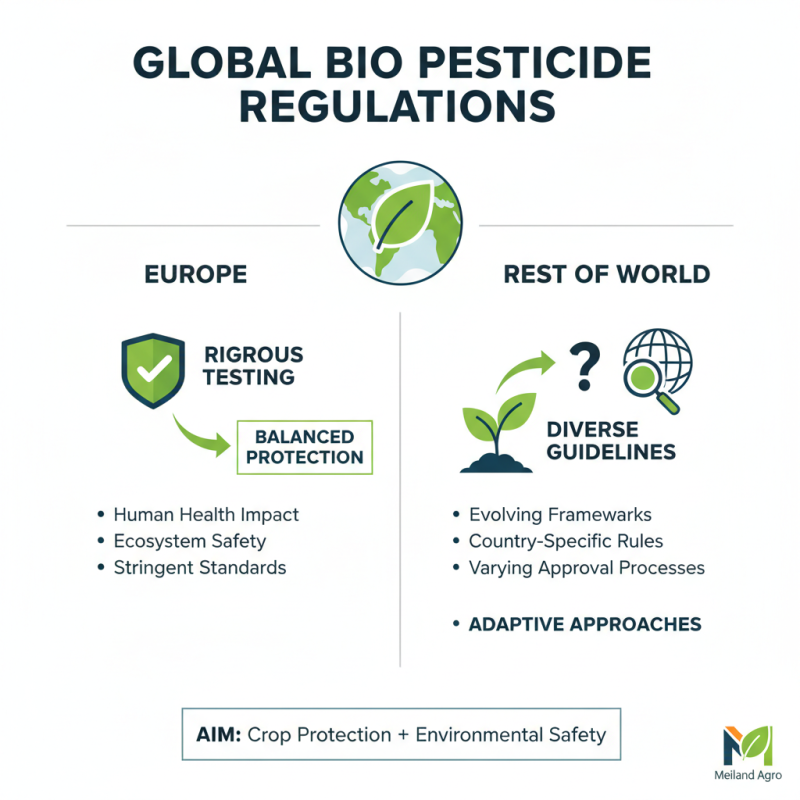
The regulatory frameworks surrounding Agriculture Bio Pesticidesare evolving rapidly. Different countries approach bio pesticide use with unique guidelines. These regulations often aim to balance Crop Protection with environmental safety. In Europe, certain standards ensure that products undergo rigorous testing. This testing assesses the impact on human health and the ecosystem.
In contrast, regions like the United States encourage the use of bio pesticides through streamlined approval processes. This approach supports innovation but also raises concerns among environmentalists. Some worry that rapid approvals may overlook long-term effects. Each nation's regulatory body plays a vital role in shaping sustainable agriculture.
Clarifying these regulations can improve understanding among farmers. Education initiatives can empower producers to make informed choices. However, inconsistencies between countries can create confusion. Stakeholders must engage in dialogue to refine these frameworks. Overall, transparent regulations will support the growth of Agriculture Bio Pesticides and promote sustainable farming practices.
The adoption of bio pesticides is growing in sustainable agriculture. A significant case study in this area comes from an organic farm in California. They replaced synthetic pesticides with neem oil and pyrethrins. The farm reported a 30% increase in crop yield and a noticeable improvement in soil health. This example highlights how bio pesticides can boost productivity while promoting ecological balance.
Another compelling instance occurred in Brazil. Researchers at a university tested a bio pesticide derived from local plant extracts. The results indicated a reduction in pest populations by over 50% without harming beneficial insects. This study is essential, as it emphasizes the potential of localized solutions in pest management.
Yet, challenges remain. Some farmers report inconsistent results when using bio pesticides. The variability in effectiveness can deter adoption, as farmers look for reliable solutions. Education and training are crucial in addressing these issues. Sharing successful strategies can build confidence in bio pesticide applications.
The landscape of agriculture is evolving. Bio pesticides are becoming essential for sustainable farming. However, their development faces challenges. A key report from the Global Bio Pesticide Market valued it at $3.48 billion in 2022. This reflects a growing demand but also highlights hurdles in cost-effectiveness and regulatory approval.
Many farmers rely on chemical pesticides for immediate results. Transitioning to Bio Fungicide options requires education. There is often skepticism regarding efficacy and practicality. Inconsistent performance against pests can hinder acceptance. The research from the Environmental Protection Agency emphasizes the need for extensive trials. Each compound must demonstrate reliability.
On the opportunity front, advancements in biotechnology open new doors for bio fungicides. Innovative methods, such as genetic engineering, hold promise. They can improve plant resilience against diseases. Despite the potential, the path is not smooth. Market acceptance and clear communication about benefits remain critical. Understanding farmers’ concerns will guide further research and development in this field.
This chart represents the effectiveness of various bio pesticides based on their average reduction percentage of agricultural pests. The data is collected from recent studies and evaluations within the domain of sustainable agriculture solutions.
: Bio pesticides target specific pests, not harming beneficial insects. This helps maintain a balanced ecosystem.
They often contain natural ingredients that enrich the soil. This promotes microbial life essential for nutrient cycling.
No, they usually break down quickly, reducing long-term contamination. This can enhance overall environmental health.
Yes, their effectiveness can vary with environmental conditions. Farmers need to understand their local ecosystems carefully.
Many trust chemical pesticides for immediate results. There is skepticism around the efficacy of bio alternatives.
Clear communication about their benefits is essential. Understanding farmers' concerns can help improve acceptance.
Advances in biotechnology may enhance plant resilience. Innovative methods like genetic engineering show promise.
Yes, each compound must prove its reliability through rigorous testing to gain the trust of farmers.
The market was valued at $3.48 billion in 2022, signaling demand but highlighting cost and regulatory challenges.
Farmers must adapt their practices and approaches to integrate these alternatives effectively into their farming strategies.
The article titled "2026 Best Bio Pesticides for Sustainable Agriculture Solutions" explores the emerging trends in bio pesticides, highlighting their growing significance in sustainable agricultural practices. It emphasizes the key advantages of bio pesticides over traditional chemical alternatives, such as reduced environmental impact and enhanced safety for non-target species. The piece also identifies top innovations in bio pesticide technology that are poised to revolutionize farming methods.
Furthermore, the article discusses how bio pesticides align with ecological farming practices and the supportive regulatory frameworks that promote their use globally. Through various case studies, the successful implementation of bio pesticides is illustrated, showcasing their effectiveness and potential. Lastly, the article addresses the future challenges and opportunities in the development of bio pesticides, underscoring their vital role in shaping the future of sustainable agriculture.